

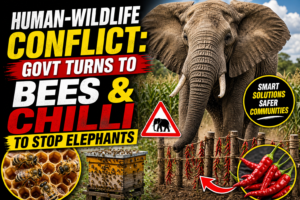
Environment, Climate, and Wildlife Minister Everlyn Ndlovu has revealed that the government is in the process of devising a program that will see people living on the edges of national parks and game reserves venturing into honey and chilli production to reduce cases of human and wildlife conflicts.
Zimbabwe has seen cases of human and wildlife conflicts rising across the country, largely due to the high population of animals, especially elephants, due to a CITES (The Convention on International Trade in Endangered Species of Wild Fauna and Flora) ban and restrictions.
These animals end up encroaching into villages were they destroy crops, kill livestock and in some cases kill people. In the past decade, over 100 people have been killed in cases of human and wildlife conflicts.
Speaking during a post 12th post cabinet briefing, Minister Ndlovu said the programs are meant to protect both the people and the animals.
‘’We have also developed a program that is going to be funded under the climate change facility, the program is to introduce honey production within the corridors where our people are, so that we prevent human-wildlife conflict. I am sure you are aware that elephants don’t like bees at all.
‘’Similarly we are also coming up with a program, where we are going to work with our villagers along the corridors to make sure that they grow piri-piri, harvest it and process it. Piri-piri again is a spice that elephants don’t want to see. So we are going into those projects along the corridors to protect our people and also protect wildlife,’’ she said.
Zimbabwe has over the years been trying to lobby CITES for permission to curl some elephants so that the numbers become manageable and align with the available space.